CASE STUDY – By Editorial
The prevailing wisdom in the C-suite dictates that to sell a disruptive product, you must spend a fortune shouting about it. Luxury cars especially demand glossy magazine spreads, prime-time television slots, and massive dealer incentives. Then there’s Tesla.
They shattered the playbook.

The truth is, Tesla has long boasted a $0 traditional advertising budget. While they certainly spend money on events and online engagement, they refuse to buy airtime or print space. Yet, their brand awareness, cultural cachet, and market capitalization eclipse nearly every competitor. How did they pull off this audacious, anti-marketing miracle? It wasn’t magic; it was the ruthless, strategic deployment of four powerful assets that every executive needs to understand.
1. The Power of Product as Propaganda
I once heard a veteran marketer muse, “If your product is boring, your marketing has to be brilliant.” Tesla chose the opposite path.
Their “product first” philosophy dictates that the vehicle itself must be the most compelling marketing tool. Instead of spending millions on a Super Bowl ad, they invested that capital back into range efficiency, software updates, and manufacturing innovation. The car isn’t just a mode of transport; it’s a self-driving, over-the-air-updating gadget that feels perpetually futuristic.
When you buy a Model 3 or a Cybertruck, you aren’t just purchasing a car; you’re joining a technological movement. This intrinsic superiority creates genuine awe, and that awe, in turn, generates word-of-mouth (WOM)—the oldest, cheapest, and most powerful form of marketing. Their product is so unique, so polarizing, that it forces a conversation. And in the digital age, a forced conversation is gold.

2. The Cult of the CEO- Leveraging a Maverick Founder
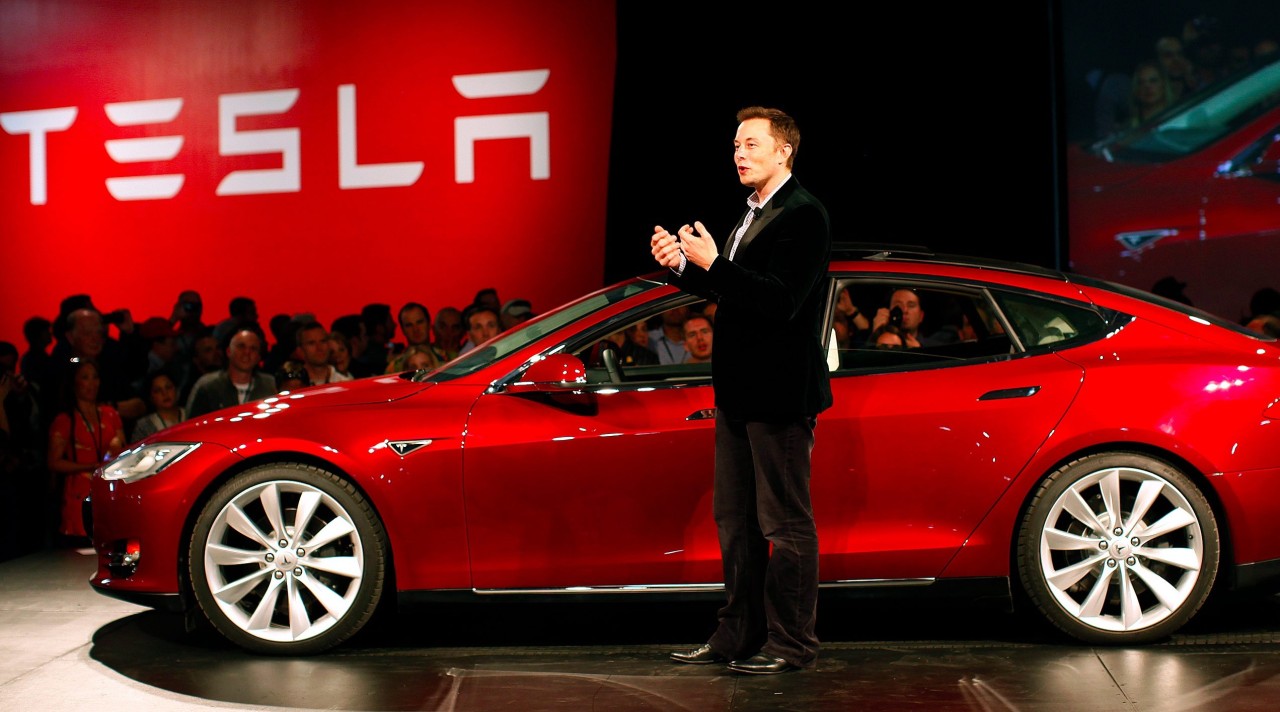
Let’s face it: whether you admire or critique him, Elon Musk is the single greatest marketing asset in Tesla’s arsenal.
He is not just an executive; he is a permanent, living news cycle. His social media presence serves as the company’s PR department, ad agency, and R&D leak line, all rolled into one volatile persona. Every tweet, every dramatic announcement—from sending a Roadster into space to unveiling the Cybertruck—is instantly amplified across global media, generating millions of dollars in free exposure.
This strategy is not just about having a famous CEO; it’s about having a CEO whose personal brand embodies the company’s mission. Musk is the embodiment of “break rules and innovate.” His unpredictable nature feeds directly into the brand narrative, ensuring Tesla is always at the center of the technological debate. This is earned media on a galactic scale.
3. Turning Customers into a Sales Force
The genius of Tesla’s marketing lies in its simplicity- they built a community, not a customer base.
Tesla’s referral program isn’t just a discount; it’s a mechanism for peer-to-peer advocacy. Owners are often the brand’s most passionate spokespeople. They host unofficial events, educate potential buyers, and defend the brand online with a fervor usually reserved for football teams. This army of loyalists creates a perpetual, self-sustaining loop:
- The Owner Experience: The joy of the supercharger network and the novelty of “summon mode” make owners want to share their excitement.
- The Digital Water Cooler: Forums, subreddits, and fan pages act as free, unbiased (or seemingly unbiased) sales channels where questions are answered by real users, circumventing the need for expensive dealerships and commissioned sales staff.
Instead of paying Google for an ad, Tesla is essentially rewarding its best customers for doing the heavy lifting of selling. It’s an elegant, capital-efficient deployment of social proof.
4. Controlled Scarcity and The Fear of Missing Out (FOMO)
Tesla mastered the art of making products feel exclusive and slightly unattainable, even when they’re mass-produced.
By launching products with long waitlists (sometimes years long, as with early Model 3s and the Cybertruck), they created genuine scarcity. This scarcity fuels FOMO, leading consumers to place deposits not because they need the car immediately, but because they fear being left behind. This strategy achieves two amazing feats:
- It provides the company with interest-free working capital from deposits.
- It turns the waiting period into a prolonged period of intense brand obsession, where the future owner talks about their imminent purchase constantly, further spreading WOM.
This case study is not a permission slip to stop marketing entirely; it is an undeniable proof point that product superiority and strategic spectacle trump paid promotion. The core takeaway for any executive is this: Invest the money you would spend on generic ads into making your product or service so remarkably excellent that your customers feel compelled to talk about it for you.
What one aspect of Tesla’s non-traditional marketing model do you think your own industry could most successfully adapt?