
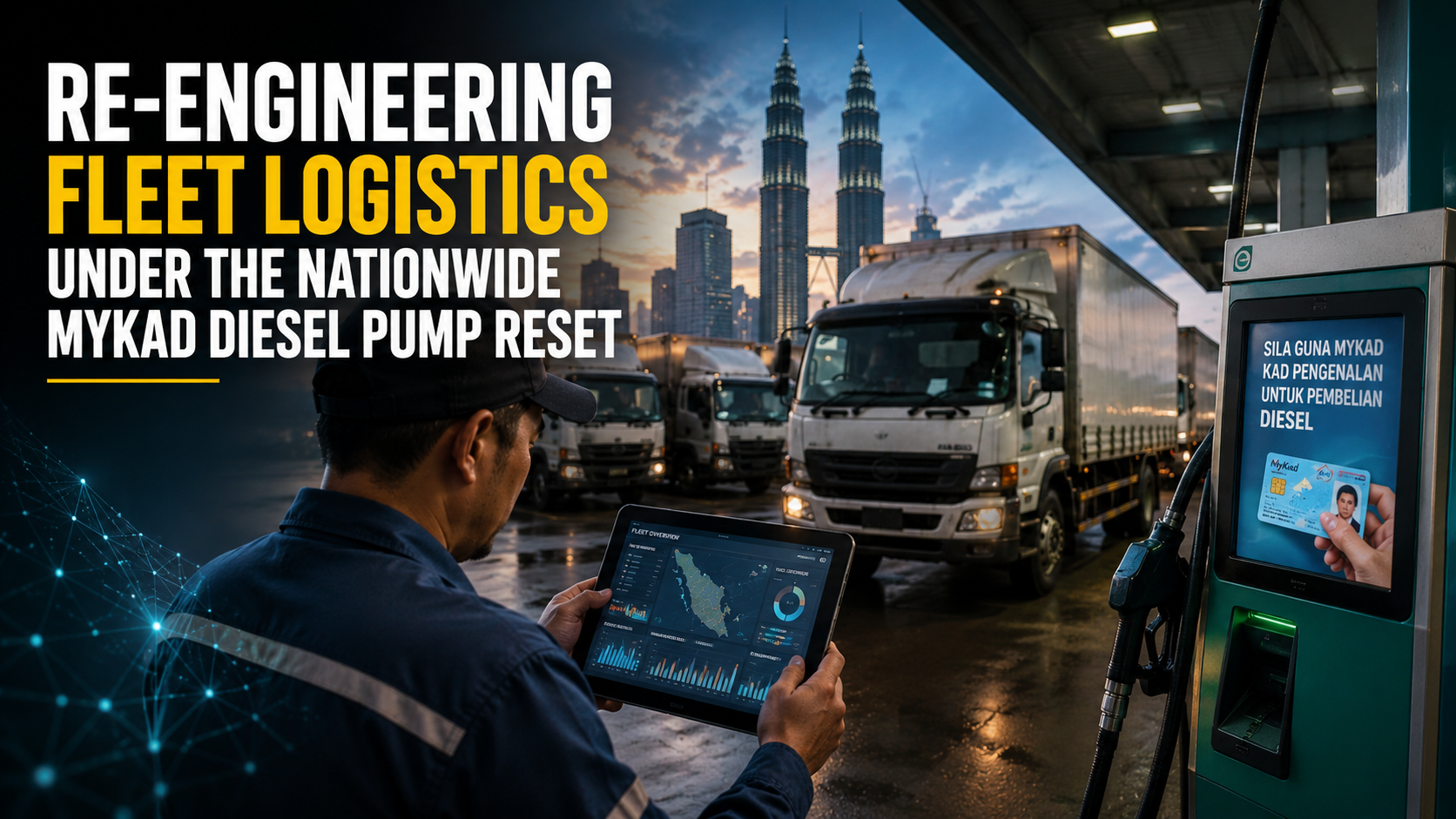
The MADANI government has fundamentally altered domestic corporate logistics. Prime Minister Anwar Ibrahim officially announced that starting July 1, 2026, the subsidised diesel mechanism will be completely unified nationwide using a uniform MyKad-based verification platform. Under this sweeping targeted reform, eligible Malaysian citizen vehicle owners will see retail prices standardized to a subsidised rate of RM2.10 per litre directly at the pump, while non-citizens and ineligible commercial parties must float to the full market rate.
For logistics managers, supply chain directors, and enterprise CEOs running massive commercial distribution fleets, this represents a sudden operational compliance shift. The era of loose corporate fleet cards and aggregate fuel accounting is coming to a hard stop.
The significant structural challenge lies in the strict verification parameters. Because the finance ministry is pulling data directly from the Road Transport Department (JPJ) to link vehicle ownership to individual MyKad profiles, companies can no longer rely on informal fuel arrangements. Left unaddressed, this policy shift will trigger massive operational friction, accounting backlogs, and sudden margin leaks. To safeguard distribution networks, corporate leaders must immediately re-architect how their transport assets consume and account for energy.

Auditing Fleet Ownership and Eliminating Vehicle Governance Vulnerabilities
The immediate operational hazard for corporate transport networks stems from vehicle registration records. Many mid-tier firms operate fleets where vehicles are informally registered under individuals, family names, or third-party contractors rather than the strict corporate operating entity.
Under the new MyKad tracking platform, any mismatch between the driver’s identity card, the vehicle registration data, and the valid road tax will immediately lock the vehicle out of the subsidised pool, forcing the driver to pay the full market price.
Enterprise leaders must enforce an immediate, exhaustive audit of the entire corporate fleet asset registry. Every single pick-up truck, delivery van, and logistical transport unit must be legally aligned with verified corporate entities or pre-registered operations using the Subsidised Diesel Control System (SKDS) frameworks. Any legacy vehicle operating under sub-optimal or informal registration must be swiftly transferred or re-documented before the July deadline to ensure that operational logistics do not stall at the petrol station.
Managing the Shared Fuel Quota and Balancing Corporate Cash Flow
A major complexity introduced by the treasury is that the new system aggregates fuel limits. The baseline quota of 200 litres per month is structurally shared with the existing Budi Madani RON95 petrol framework.
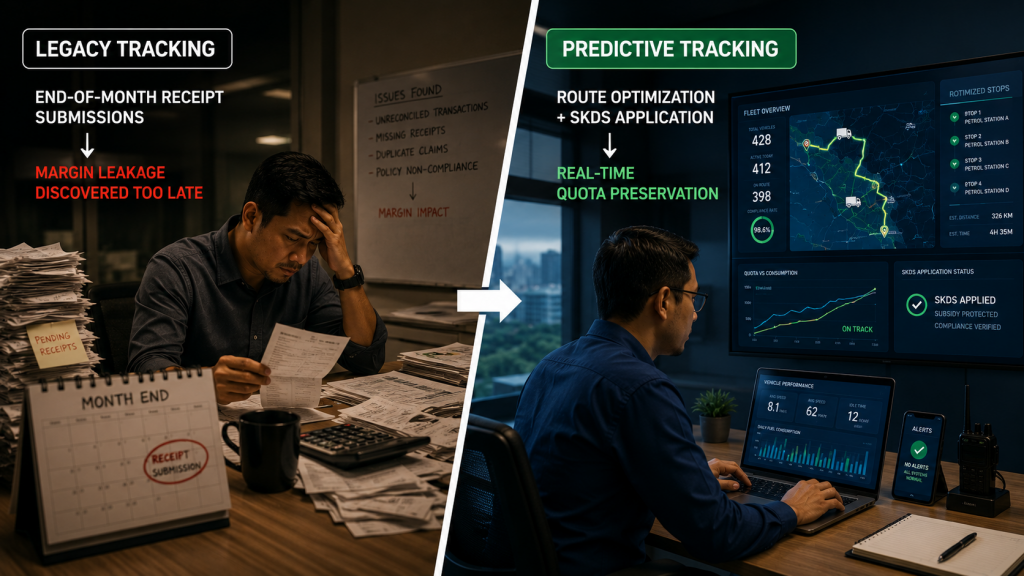
For companies that deploy mixed fleets utilizing both petrol and diesel variants, managing this shared ceiling requires precision tracking. Exceeding the standard quota means the fuel cost instantly leaps by over RM2.00 per litre to the unsubsidised market rate, which will rapidly destroy distribution margins.
To counter this, chief financial officers must transition from retrospective quarterly expense reports to real-time predictive fuel analytics. Logistical routes must be mathematically optimized to ensure monthly mileage stays tightly balanced within the approved volume limits.
Furthermore, business owners using commercial vehicles for active logistics must immediately apply for the additional 100-litre monthly business quota through official government channels to expand their operational headroom before heavy distribution cycles begin.
Transitioning Fleet Contracts to Variable Logistics Pricing Models
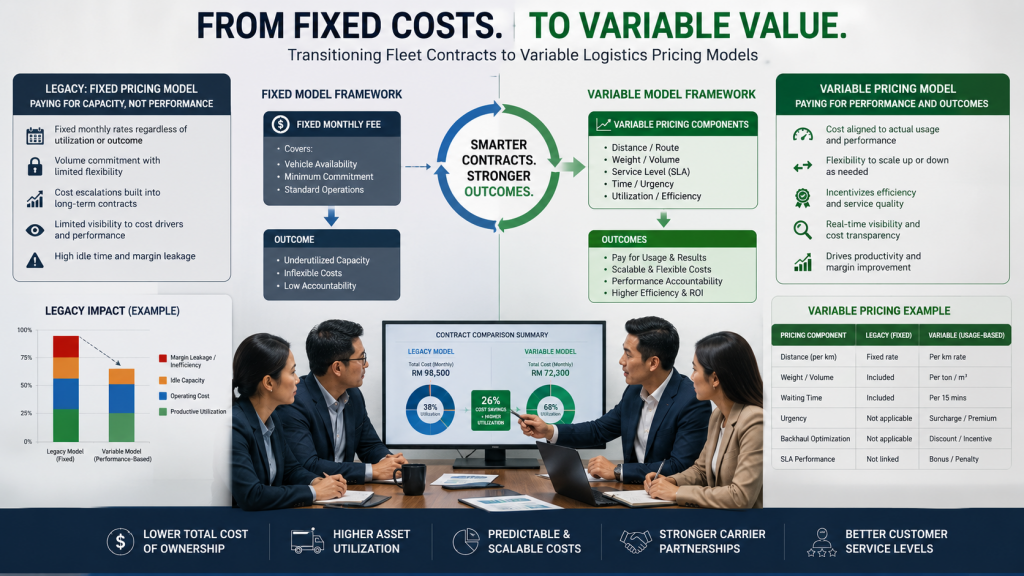
With the integration of the MyKad system and targeted tracking, fuel costs will inevitably become highly variable depending on driver status, state cross-border runs, and quota thresholds. For long-term B2B delivery contracts, continuing to quote fixed, unyielding transportation shipping rates is a financial trap.
Forward-thinking logistics directors are protecting their gross profit lines by completely rewriting service level agreements. Traditional fixed freight rates are being discarded in favor of modern, dynamic logistics pricing structures.
These updated agreements feature variable fuel surcharge clauses that adjust automatically based on real-time pump price data and verified quota consumption. This transparently shifts the risk of macroeconomic fuel volatility away from the logistics provider and onto the broader supply chain ecosystem, protecting the long-term viability of the shipping firm.
The Fleet Reset Strategic Checklist
| Operational Focus | Critical Policy Friction | Strategic Action Item |
| Asset Alignment | Vehicle registration names mismatching with driver MyKad credentials | Complete a rapid legal audit of all fleet vehicle titles to ensure strict JPJ data compliance |
| Quota Maximization | Shared 200-litre limits running dry mid-month across distribution runs | Proactively submit commercial applications via the portal to secure additional volume extensions |
| Contract Integrity | Fixed-rate transport pricing absorbing the hit of unsubsidised market fuel spikes | Restructure B2B freight agreements to feature automated, index-linked fuel surcharge clauses |