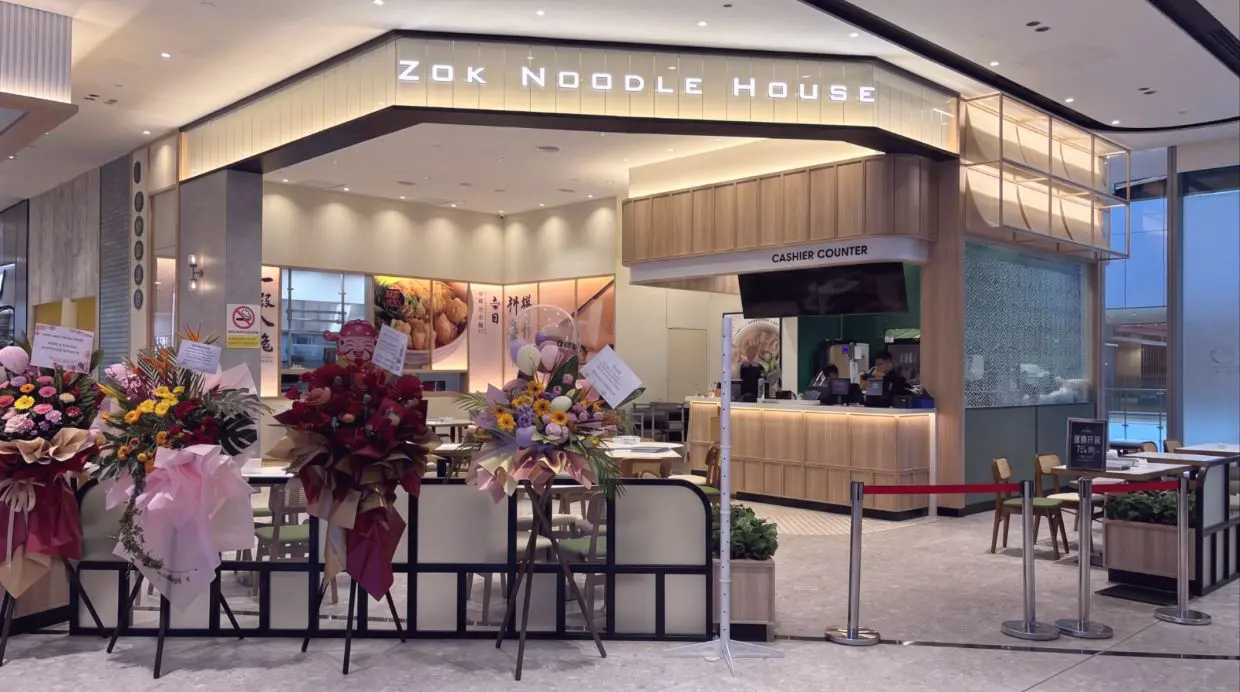
On the surface, a corporate filing detailing an RM1.25 million asset acquisition by a public-listed company barely registers as news in Malaysia’s fast-moving equity market. But when Hextar Retail Bhd (KL- HEXRTL) announces it is absorbing the inventory, equipment, tenancy rights, and brand goodwill of a single Zok Noodle House outlet in Bandar Sunway, corporate strategists and sharp investors should sit up and pay attention.
This is not a random retail transaction. It is a highly targeted, calculated asset consolidation that highlights how corporate architects restructure consumer footprints under the radar.
The Architecture of a Connected Restructuring
To understand why this transaction matters, you have to look past the cash consideration and dissect the corporate structural links.
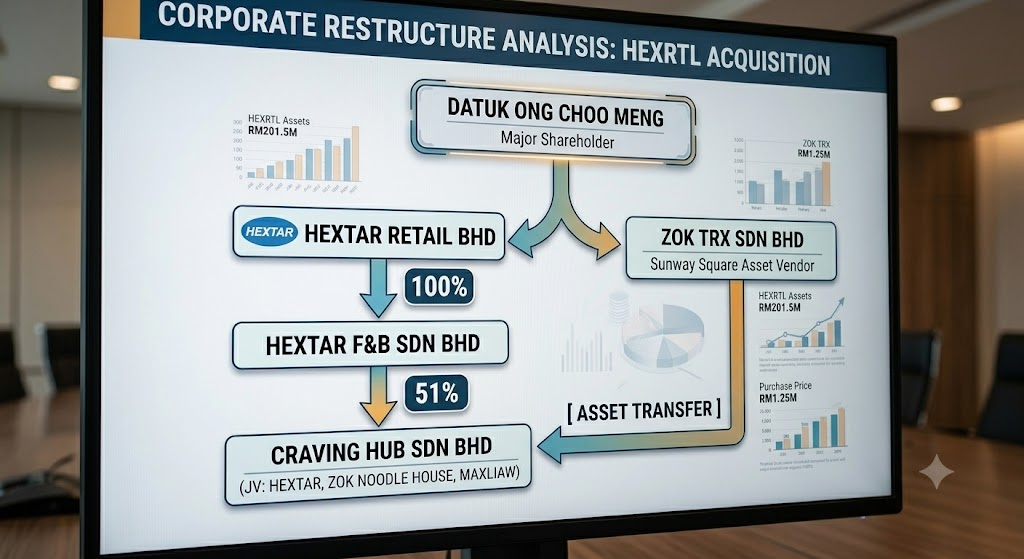
The acquisition is executed via Craving Hub Sdn Bhd, an indirect subsidiary that is 51% owned by Hextar Retail. The remaining equity in Craving Hub is shared by Zok Noodle House Sdn Bhd and Maxliaw Ventures Sdn Bhd.
Because Hextar Retail’s major shareholder, Datuk Ong Choo Meng, is also the majority shareholder of the asset vendor (Zok TRX), the transaction is technically classified as a related-party deal. Adding to the close structural alignment, Hextar Retail Managing Director Vo Nghia Huu is the brother-in-law of Ong, while Craving Hub Director Wong Yew Loong holds an overlapping stake as a shareholder in Zok TRX.
The Strategic Takeaway: When a major conglomerate shareholder folds operational assets from a private vehicle into a public-listed company’s subsidiary, it rarely indicates a change in day-to-day operations. Instead, it represents a formalization of asset ownership, bringing a proven, operational cash-generating retail brick under the direct oversight of the public group’s food and beverage division.
Diversifying Out of the Red: The F&B Imperative
Hextar Retail’s push into consumer fast-casual dining comes at a critical operational juncture. The company’s first-quarter financial results ended March 13, 2025 (1QFY2026), show a complex financial narrative:
- Top-Line Surge: Revenue skyrocketed by 96.6% to RM30.36 million, indicating aggressive top-line scaling.
- Bottom-Line Pressure: Net losses widened significantly, dipping to RM1.32 million compared to a net loss of RM0.55 million in the previous corresponding quarter.
With shares currently hovering flatly around 43 sen and a market capitalization of RM215.3 million, the market has adopted a cautious stance on the group’s ongoing turnaround strategy.
In this environment, organic, greenfield expansion—building a restaurant brand from scratch, negotiating raw landlord leases, and absorbing initial gestation losses—is too slow and capital-intensive. By acquiring the turnkey operations of an existing, functional outlet at Sunway Square, Hextar buys immediate cash flow, established customer data, and zero-day operational viability for RM1.25 million.
Why the Zok Noodle Segment?
The choice of Zok Noodle House aligns with a highly resilient pocket of the Malaysian food service ecosystem. Unlike trendy Western cafe concepts or highly cyclical dessert chains, local casual Chinese noodle dining enjoys robust, everyday consumer demand across both economic expansions and downturns.
By taking structural control of localized footprints like Bandar Sunway—a premium, high-density student and commercial hub—Hextar positions its F&B arm to secure predictable consumer volume while insulating its broader retail portfolio from shifting macroeconomic winds.
This RM1.25 million transaction may be small relative to Hextar’s RM201.5 million asset base, but as an indicator of corporate intent, it confirms that the group is fully committed to buying its way into institutional food service stability.